Compact setup for edible container gardening on narrow apartment balconies
This guide features practical Amazon product ideas related to Compact setup for edible container gardening on narrow apartment balconies. Prices and ratings are not shown because they may change over time. Please check the latest product details directly on Amazon before purchasing.
1. Vertical Garden Planter 4 Tier Stackable System 16 Plants, Space Saving Herb, Strawberry & Food Crop Planter with Center Support Hole for Indoor Outdoor Gardening (4, Midnight Black, Small)
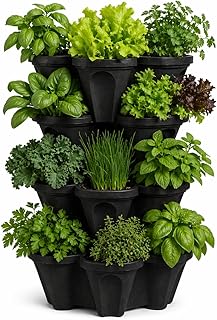
Overview
A compact, stackable 4-tier planter system designed for vertical gardening that accommodates up to 16 small plants. The unit, finished in midnight black and labeled as small, is suitable for indoor or outdoor use and includes a center support hole intended to assist with centralized planting and watering arrangements.
Key Benefits
– Space-saving vertical layout designed for maximizing planting capacity in limited areas such as balconies, patios, or kitchen corners.
– Stackable tiers allow for flexible arrangement and may help you grow a variety of herbs, strawberries, or small food crops in one footprint.
– Center support hole intended for adding structural support or routing a watering stake, which may help simplify care and maintenance across multiple levels.
– Compact aesthetic and consistent color make it easy to integrate with home décor or outdoor settings.
Use Cases
– Create a kitchen herb garden on a windowsill or countertop to keep fresh basil, parsley, and chives within reach while cooking.
– Place on a balcony or small patio to grow strawberries and compact vegetables without using traditional ground beds.
– Use in a sunroom or shared community space to demonstrate vertical gardening techniques or teach beginner gardeners.
Pros
– Highly space-efficient layout that supports multiple plants in a small footprint.
– Stackable design allows for vertical expansion or compact storage when not in use.
– Versatile for both indoor and outdoor placement, making it suitable for different light and space conditions.
Considerations
– Best suited for small plants and crops; larger or heavy-rooted plants may not be appropriate.
– Vertical setups often need more frequent monitoring for water and stability—regular care helps maintain plant health and balance.
Who It's For
Ideal for apartment dwellers, beginner gardeners, or anyone looking to grow herbs and small edibles in constrained spaces. It suits people who want a tidy, vertical planting solution that fits on countertops, balconies, or small outdoor corners.
Final Thoughts
This 4-tier stackable planter offers a practical, space-conscious way to cultivate multiple small plants in one organized unit. It’s a flexible option designed for those seeking to maximize growing space without committing to a full garden bed.
2. VECELO 5 Tier Vertical Garden Planter, Self Watering Stackable Planters with Wheels for Strawberries, Herbs, Flowers, Vegetables, White

Overview
The VECELO 5 Tier Vertical Garden Planter is a stackable, self-watering planting system on wheels, designed for growing strawberries, herbs, flowers, and compact vegetables in a compact footprint. Its tiered layout and mobile base make it suitable for balconies, patios, or other small outdoor and sheltered indoor spaces.
Key Benefits
– Space-saving vertical design may help you fit more plants into a small area compared to traditional pots.
– Integrated self-watering concept is designed for more consistent moisture management and may reduce the need for daily watering.
– Stackable modules allow flexible arrangement and expansion to suit your growing needs.
– Caster wheels make it easy to move the planter to follow the sun or protect plants from changing weather conditions.
Use Cases
– Urban balcony herb garden: cultivate basil, parsley, and chives where horizontal space is limited.
– Patio flower display: create layered color and texture without dedicating ground space.
– Seedling-to-transplant staging: keep young plants organized and mobile while they establish.
Pros
– Maximizes growing capacity in a small footprint through vertical tiering.
– Mobility provided by wheels simplifies repositioning for light and convenience.
– Self-watering design is intended to support more consistent soil moisture between waterings.
Considerations
– Assembly is required and taller, stacked setups should be placed on a level, stable surface.
– When filled with soil and water, the planter can become substantially heavier; consider load-bearing capacity of the placement area and be cautious when moving.
Who It's For
This planter is suitable for apartment dwellers, balcony gardeners, and anyone seeking a compact, modular solution for growing multiple plants in a limited area. It may also appeal to beginners looking for a lower-maintenance option.
Final Thoughts
The VECELO 5 Tier Vertical Garden Planter offers a practical, space-conscious approach to container gardening with features designed for mobility and moisture management. It may help you expand your planting possibilities where ground space is scarce.
3. ETELI Vertical Raised Garden Bed 3 Tier Garden Planter Indoor Outdoor Herb Planter with 6 Removable Boxes Standing Garden Planter with Drainage Holes Elevated Raised Bed for Patio Balcony Porch, Grey

Overview
The ETELI Vertical Raised Garden Bed is a three-tier, standing planter designed for indoor or outdoor use. Featuring six removable boxes and built-in drainage holes, this elevated planter is suitable for growing herbs, small vegetables, and ornamental plants on patios, balconies, porches, or in sunrooms.
Key Benefits
– Space-saving vertical layout: three stacked tiers provide multiple planting zones while occupying a compact footprint, designed for small outdoor or indoor spaces.
– Flexible planting and maintenance: six removable boxes allow you to rearrange, replant, or lift individual containers for watering, harvesting, or inspection.
– Built-in drainage: drainage holes in each box are provided to help manage excess water and reduce the risk of waterlogged soil.
– Elevated design: raises plants off the ground to make tending and watering easier and to keep plants separated from ground pests and debris.
Use Cases
– Apartment balcony herb garden: create a variety of culinary herbs in a limited area where horizontal space is scarce.
– Porch or patio display: arrange seasonal flowers or small ornamental plants to add layered visual interest at eye level.
– Indoor seed-starting or windowsill setup: use the removable boxes to start seedlings or grow kitchen herbs where they can receive natural light.
Pros
– Efficient use of vertical space for multiple plantings.
– Removable boxes simplify planting, rotation, and cleaning.
– Drainage holes in each box support better moisture management.
Considerations
– Removable boxes offer convenience but may have limited root depth, so larger or deep-rooted plants may not be suitable.
– Assembly is typically required; plan for a brief setup time and enough floor/ground space for the assembled unit.
Who It's For
This planter is suitable for apartment dwellers, balcony gardeners, and anyone looking to add a compact, multi-tier planting solution to a patio, porch, or indoor space.
Final Thoughts
The ETELI Vertical Raised Garden Bed is a practical option for maximizing planting capacity in small spaces, with features that make planting and upkeep more convenient. It’s designed for gardeners who want a tidy, elevated solution for herbs, small vegetables, and decorative plants.
4. Indoor Garden Hydroponics Growing System: 10 Pods Kit with LED

Overview:
This indoor hydroponics growing system is a compact kit designed for soil-free gardening at home. The unit includes a ten‑pod layout and integrated LED lighting, suitable for growing herbs, microgreens, leafy greens, and other small plants year‑round in indoor spaces.
Key Benefits:
– Space-conscious planting: the ten‑pod configuration is designed for kitchens, counters, balconies, or other small areas where traditional gardening isn’t practical.
– Consistent light source: built-in LED lighting provides steady illumination that may help support seedling and vegetative growth compared with variable ambient light.
– Low‑mess cultivation: a hydroponic approach reduces the need for soil, which may simplify cleanup and routine maintenance.
– Beginner friendly format: the pod system and straightforward layout are suitable for users exploring indoor gardening or experimenting with different plant varieties.
Use Cases:
– Fresh kitchen herbs on demand: keep a selection of basil, parsley, and cilantro within arm’s reach for cooking without trips to the store.
– Apartment or urban gardening: bring plant variety into small living spaces where outdoor garden plots aren’t available.
– Classroom or hobby projects: a contained, visible system for teaching plant growth basics or trying new seed varieties.
Pros:
– Compact footprint that fits on countertops and small tables.
– Integrated LED lighting provides a consistent light source for indoor growth.
– Ten pods allow simultaneous cultivation of multiple plants or varieties.
Considerations:
– Like all hydroponic systems, regular attention to water levels and nutrient solutions is likely required; expect a learning curve when adjusting for different plant types.
– The system needs a power source for the LED lights and may require an appropriate location with stable surface and access to an outlet.
Who It's For:
Ideal for home cooks, apartment dwellers, and curious beginners who want to try soil‑free indoor gardening or maintain a small assortment of fresh plants year‑round.
Final Thoughts:
This ten‑pod hydroponic kit with LED lighting is a practical option for people seeking a tidy, space‑efficient way to grow small plants indoors. It’s designed to make indoor gardening approachable while allowing room to experiment and learn.
5. Hydroponics Growing System Kit: 12 Pods with LCD Control Panel

Overview
This Hydroponics Growing System Kit is a countertop indoor garden solution designed for growing multiple plants without traditional soil. The unit includes 12 planting pods and an LCD control panel that lets you monitor and adjust key growing parameters from a central interface.
Key Benefits
– Multi-plant capacity: Twelve pods let you cultivate a variety of herbs, microgreens, or small leafy vegetables at the same time, suitable for experimenting with different varieties.
– Centralized control: The LCD control panel provides easy access to timing and basic environmental settings, which may help simplify routine monitoring and adjustments.
– Indoor convenience: Designed for indoor use, the kit may help bring fresh produce closer to the kitchen, living area, or classroom without needing an outdoor garden.
– Space-efficient planting: The compact arrangement of pods is suitable for countertops, balconies, or other small spaces where a full garden isn’t practical.
Use Cases
– Kitchen herb station: Keep frequent-use herbs like basil, cilantro, and parsley within easy reach for cooking and garnishing.
– Educational project: Introduce students or family members to plant growth and responsible plant care through hands-on observation and adjustments.
– Urban gardening: Grow salad greens or microgreens in apartments or small homes where outdoor space is limited.
Pros
– User-friendly interface: The LCD control panel is intended to make timing and basic setting changes straightforward for beginners.
– Versatile planting options: With a dozen pods, you can trial multiple varieties or stagger plantings for continuous harvests.
– Compact footprint: The design is suitable for small indoor spaces, helping you grow plants without a large commitment of room.
Considerations
– Additional supplies may be needed: Seeds, grow media, and plant nutrients are often sold separately and may be required to begin planting.
– Ongoing care required: Like any growing system, this kit needs regular attention for water levels, cleaning, and occasional adjustments to settings; expect a bit of routine maintenance.
Who It's For
This system is suitable for beginners and hobby gardeners who want an approachable, indoor method for growing herbs, greens, or small plants. It’s also a practical option for anyone living in urban or space-limited environments who wants to experiment with hydroponic growing.
Final Thoughts
The Hydroponics Growing System Kit offers a convenient way to explore indoor gardening with multiple planting pods and a dedicated LCD control panel. It may help simplify small-scale, soil-free growing for home cooks, learners, and urban gardeners.
6. Indoor Garden Hydroponics Growing System: 10 Pods Kit with LED

Overview
An indoor hydroponic growing system designed to hold up to 10 pods and equipped with integrated LED lighting. This soil-free kit is suitable for cultivating herbs, salad greens, microgreens, and small ornamentals inside homes, apartments, or classrooms, offering a contained way to experiment with indoor gardening year-round.
Key Benefits
– Integrated LED lighting provides consistent, plant-focused illumination that may help seedlings and small plants develop indoors.
– Hydroponic, water-based growing approach is designed for a cleaner, soil-free setup that may reduce the need for messy potting.
– Ten pod capacity allows you to grow multiple varieties at once, making it suitable for small herb collections or mixed greens.
– Compact footprint and enclosed design help centralize watering and light in one unit, which may simplify daily care routines.
Use Cases
– A kitchen countertop herb station for someone who wants convenient access to basil, parsley, and cilantro for cooking.
– A beginner-friendly introduction to hydroponics for a student, hobbyist, or family STEM project exploring plant growth.
– An urban apartment dweller looking to supplement grocery-bought produce with small-batch, year-round greens without outdoor garden space.
Pros
– Designed for straightforward setup and routine maintenance, with a contained system that helps keep surfaces clean.
– Suitable for a variety of small plants—herbs, lettuces, and microgreens fit well in a multi-pod layout.
– Compact, apartment-friendly design keeps the garden within reach while minimizing space requirements.
Considerations
– The system requires regular monitoring of water level and nutrient solution to support plant growth; it is not a “set-and-forget” appliance.
– Intended for small plants and limited harvests—this kit may not be suitable for larger fruiting vegetables or high-volume production.
Who It's For
This kit is well suited to urban gardeners, beginners, and anyone curious about hydroponics who wants a compact, indoor option for growing herbs and small greens. It’s also a practical choice for classrooms or hobbyists looking to learn plant-care basics.
Final Thoughts
The 10-pod indoor hydroponic system with LED offers a tidy, approachable way to explore soil-free gardening at home. It may help users grow a variety of small plants conveniently, while encouraging experimentation and hands-on learning.
7. Hydroponics Growing System: 12 Pods Indoor Herb Garden with LED

Overview
This hydroponics growing system is a compact indoor herb garden with 12 pods and integrated LED lighting, designed for soil-free cultivation of herbs, microgreens, and small leafy plants. It aims to simplify indoor gardening by combining multiple planting sites with consistent light in a single, countertop-friendly unit.
Key Benefits
– 12 planting pods provide space to grow a variety of herbs and small greens side-by-side, suitable for staggered harvesting or experimenting with different varieties.
– Built-in LED lighting supplies consistent illumination where natural light is limited, which may help plants maintain steady development indoors.
– Soil-free setup reduces mess and may make cleanup easier than traditional potted plants, appealing for kitchens and shared living spaces.
– Compact design is intended for indoor use, making it suitable for apartments, offices, or balconies where outdoor gardening is not available.
Use Cases
– A home cook who wants frequent access to fresh basil, parsley, and cilantro without trips to the grocery store or a full outdoor garden.
– An apartment resident with limited window light who needs a space-saving solution to grow herbs year-round.
– A classroom or hobbyist project to learn basic principles of plant growth and observation in a contained, indoor setup.
Pros
– Supports multiple plants at once, offering variety and continuous harvesting opportunities.
– Integrated lighting reduces dependence on natural sunlight and can make placement flexible.
– Designed for ease of use, suitable for beginners who want a more guided indoor gardening experience.
Considerations
– Requires access to a power source for the LED lighting; placement should account for an electrical outlet and safe indoor use.
– Regular maintenance such as refilling water, occasional cleaning, and plant care will be necessary to sustain healthy growth; it is not a no-maintenance solution.
Who It's For
This system is suitable for people who want a convenient, space-conscious way to grow herbs and small greens indoors—especially apartment dwellers, home cooks, beginners, and hobby gardeners seeking a tidy alternative to soil gardening.
Final Thoughts
With a 12‑pod layout and integrated LED illumination, this indoor hydroponic garden is designed to make small-scale, year-round growing more accessible and manageable. It may help bring fresh flavors and gardening enjoyment into compact living spaces.
8. Hydroponics Growing System Kit: 12 Pods Temp & Humidity Monitor

1. Overview
A compact hydroponics growing system kit designed for indoor gardening, featuring 12 planting pods and an integrated temperature and humidity monitor. This all-in-one setup is intended to make soilless cultivation more approachable for hobbyists, apartment dwellers, and educators.
2. Key Benefits
– 12 planting pods provide space to grow a variety of herbs, microgreens, and small leafy vegetables, suitable for a countertop or small indoor area.
– Built-in temperature and humidity monitoring helps you keep track of key environmental conditions and may help you make adjustments for healthier plant growth.
– Designed for straightforward assembly and routine care, making it suitable for beginners and time-conscious gardeners.
– Reduces the need for soil, which may help minimize mess and make indoor maintenance easier.
3. Use Cases
– A kitchen herb station for fresh basil, cilantro, and parsley within easy reach for cooking.
– A classroom or group project to teach students about plant lifecycles, water-based growing methods, and environmental monitoring.
– Apartment or urban living where outdoor garden space is limited but fresh greens are still desired year-round.
4. Pros
– Accommodates a dozen plants, allowing experimentation with different varieties at once.
– Onboard temperature and humidity monitoring gives quick feedback on growing conditions.
– User-oriented design aimed at simplifying hydroponic setup and daily upkeep.
5. Considerations
– Regular attention to water level and nutrient solution is typically required; plants won’t grow unattended indefinitely.
– Performance can depend on room light and placement; additional light or relocation may be needed for optimal plant development.
6. Who It's For
Suitable for beginners, busy home cooks, educators, and small-space gardeners looking to explore hydroponics without a large footprint. It’s designed for people who want a more controlled indoor growing experience.
7. Final Thoughts
This 12-pod hydroponic kit with temperature and humidity monitoring offers a practical introduction to soilless gardening. It may help simplify indoor growing and provide a convenient way to enjoy fresh greens year-round.
9. Raised Garden Bed Vertical Tiered Standing Planter Box Outdoor, Black

Overview:
This raised garden bed is a vertical, tiered standing planter box designed for outdoor use with a black finish. It provides stacked planting surfaces to make the most of limited space and create a layered display for flowers, herbs, or small vegetables.
Key Benefits:
– Space-saving vertical layout designed for patios, balconies, or small yards, helping maximize planting area without a large footprint.
– Tiered configuration suitable for mixing different plants or creating a cascading visual effect that may help improve access for watering and harvesting.
– Standing design keeps plants elevated off the ground, which may reduce contact with soil pests and make maintenance more comfortable.
– Black finish offers a neutral, contemporary look that can coordinate with a variety of outdoor styles.
Use Cases:
– Urban balcony gardening: create a compact herb and salad greens station when horizontal space is limited.
– Patio or deck accent: display annuals and trailing plants in tiers to add height and visual interest near seating areas.
– Community or container gardening: use as a portable planting solution for small shared plots or seasonal displays.
Pros:
– Efficient use of vertical space for increased planting capacity in a smaller footprint.
– Versatile for a range of small plants, from herbs to compact ornamentals.
– Elevated, tiered arrangement can simplify watering access and routine care.
Considerations:
– Vertical planters often require more frequent watering than deeper, ground-level beds; placement near a water source may be helpful.
– Larger or deep-rooted plants may not be suitable; this product is better suited to herbs, small vegetables, and compact flowering plants.
Who It's For:
Gardeners with limited outdoor space or anyone looking to add a tidy, tiered planting solution to a patio, balcony, or small yard. Ideal for those who want an organized, elevated display for herbs, annuals, or container vegetables.
Final Thoughts:
This vertical tiered planter box is a practical option for creating layered plantings in tight spaces and enhancing outdoor décor with an elevated, black-finished design. It’s designed to offer a flexible, space-conscious way to grow and display a variety of small plants.
10. The Compact Garden: A Beginner's Guide to Growing Vegetables in Small Spaces

Overview
The Compact Garden is a practical beginner's guide to growing vegetables in limited spaces, focusing on approachable techniques for balconies, patios, windowsills, and tiny yards. It presents planning strategies, space-saving methods, and simple care practices designed for new gardeners who want to make the most of small areas.
Key Benefits
– Space-smart strategies: Explains container options, vertical gardening, and layout ideas that may help maximize yield in constrained areas.
– Practical planning: Offers straightforward guidance on selecting crops, scheduling planting, and organizing small garden projects suitable for seasonal cycles.
– Easy-care techniques: Covers soil preparation, watering approaches, and common maintenance tips designed for busy lifestyles and compact setups.
– Troubleshooting pointers: Includes guidance on identifying common problems and adapting solutions that may help you avoid common beginner mistakes.
Use Cases
– An apartment dweller wanting to grow salad greens and herbs on a sunny balcony using pots and hanging planters.
– A homeowner with a small patio looking to add a raised container or vertical trellis to expand edible options without a full yard.
– A teacher or community organizer creating a compact, hands-on vegetable garden project for classrooms or shared urban spaces.
Pros
– Clear, beginner-friendly language that makes gardening concepts accessible.
– Focus on small-space solutions that prioritize efficiency and low-footprint layouts.
– Practical, actionable advice that can be adapted to different light conditions and container choices.
Considerations
– The book emphasizes vegetable gardening in small spaces and may not cover ornamental gardening or large-scale production in depth.
– Some recommendations will likely need adaptation for local climate, microclimates, and seasonal variations.
Who It's For
Ideal for first-time gardeners, city residents, and anyone wanting to grow vegetables with limited outdoor space or minimal equipment. It’s suitable for people seeking a manageable, practical introduction to edible gardening.
Final Thoughts
A focused, accessible starter guide for compact vegetable gardening that may help beginners plan and maintain productive small-space plots. It’s a practical resource for anyone ready to try growing food without a traditional yard.
Final Thoughts
Use this guide as a starting point, then compare the latest product details, availability, and customer feedback directly on Amazon before making your final choice.