Space-saving tools for starting an edible balcony microgarden in partial shade
This guide features practical Amazon product ideas related to Space-saving tools for starting an edible balcony microgarden in partial shade. Prices and ratings are not shown because they may change over time. Please check the latest product details directly on Amazon before purchasing.
1. The Edible Balcony: Growing Fresh Produce in Small Spaces

Overview
The Edible Balcony: Growing Fresh Produce in Small Spaces is a practical guide that focuses on bringing productive gardening to balconies, patios, and other compact outdoor areas. It presents approachable strategies and ideas for growing vegetables, herbs, and small fruiting plants using containers, vertical supports, and space-smart planning.
Key Benefits
– Practical, space-focused techniques that may help you maximize limited outdoor areas through container selection, vertical gardening, and layout planning.
– Guidance on plant selection and seasonality suitable for urban environments, with tips to match crops to light, climate, and available space.
– Advice on everyday care—watering, soil mixes, feeding, and simple pest management—that’s designed for gardeners with busy schedules.
– Creative, low-footprint solutions for increasing access to homegrown produce and for making small spaces more productive and attractive.
Use Cases
– An apartment dweller with a sunny balcony who wants to grow herbs, salad greens, and a few compact vegetables in pots and hanging planters.
– A townhouse owner aiming to add vertical planters and trellises to a narrow patio to grow climbing beans, tomatoes in containers, or compact berry bushes.
– Someone starting a beginner garden project with limited time who needs step-by-step, space-conscious techniques rather than large-scale garden planning.
Pros
– Focused on small-space methodologies, making it easy to translate ideas to balconies, rooftops, or patios.
– Combines practical how-to tips with creative design ideas to help gardens be both productive and visually appealing.
– Accessible language and actionable suggestions suitable for both beginners and gardeners looking to scale down standard approaches.
Considerations
– Results will vary depending on local climate, sunlight, and the gardener’s time investment; the book offers guidance rather than guaranteed outcomes.
– If you’re seeking highly technical horticultural data or commercial-scale instructions, this resource is more tailored to home and urban gardening than professional production.
Who It's For
This book is suitable for urban residents, renters, and anyone with limited outdoor space who wants to grow food at home. It’s particularly helpful for gardeners who prefer compact, low-impact systems and practical, step-by-step advice.
Final Thoughts
The Edible Balcony provides thoughtful, space-aware strategies for turning small outdoor areas into productive gardens. It may help you plan and maintain a manageable, rewarding edible garden tailored to your balcony or patio.
2. Vertical Garden Planter 4 Tier Stackable System 16 Plants, Space Saving Herb, Strawberry & Food Crop Planter with Center Support Hole for Indoor Outdoor Gardening (4, Midnight Black, Small)
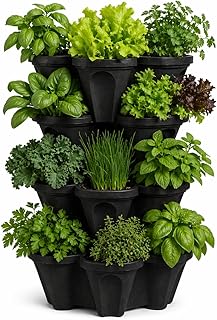
Overview
A compact 4-tier stackable planter system designed for vertical gardening at home. This small, midnight black unit is suitable for indoor or outdoor use and is arranged to accommodate up to 16 plants with a center support hole that may help with staking or routing a watering line.
Key Benefits
– Space-saving vertical design may help maximize planting area on balconies, patios, or countertops while taking up a small footprint.
– Modular, stackable tiers allow flexible configuration and make it easy to expand or reconfigure a planting arrangement.
– Holds multiple small plants—suitable for herbs, strawberries, microgreens, and other small food crops—so you can grow a variety in one compact system.
– Center support hole provides an option for adding a central stake, drip tubing, or a support rod and may help organize plant supports or irrigation.
Use Cases
– Kitchen herb garden: keep fresh basil, parsley, and chives within reach on a sunny windowsill or countertop.
– Balcony or patio planting: grow strawberries and compact vegetables where floor space is limited.
– Classroom or beginner gardening project: an accessible way to teach plant care and succession planting in a small footprint.
Pros
– Efficient vertical layout makes good use of limited space.
– Stackable, modular design gives flexibility for different planting needs and layouts.
– Versatile for indoor or outdoor settings and a variety of small edible or ornamental plants.
Considerations
– As a small, multi-plant system, individual planting compartments may have limited root volume and could require more frequent watering or soil changes than larger pots.
– Lower tiers may receive less direct light depending on placement and orientation; consider rotating the unit or positioning it in a bright spot for even growth.
Who It's For
Suitable for urban gardeners, apartment dwellers, or anyone looking to grow herbs and small crops in a compact, modular setup. It may appeal to beginners and experienced growers who want a tidy, space-conscious planting solution.
Final Thoughts
This 4-tier stackable planter is designed for convenient, space-saving gardening and may help you cultivate multiple small plants in a single footprint. It’s a practical option for those seeking a versatile, compact system for indoor or outdoor use.
3. Fiskars 4-in-1 Seed Planting Garden Trowel and Seed Sower Tool

Overview
The Fiskars 4-in-1 Seed Planting Garden Trowel and Seed Sower Tool is a compact, multifunctional hand tool designed for planting small seeds and routine garden tasks. It combines several planting functions into one tool to help streamline seed placement, hole making, and small-scale soil work around the yard or in containers.
Key Benefits
– Combines multiple planting tasks in a single tool, which may help reduce trips to the shed and the number of separate tools needed.
– Designed to assist with consistent seed placement, potentially improving spacing and reducing time spent measuring by hand.
– Ergonomic handle design may help increase comfort during repetitive planting and probing tasks.
– Compact size and straightforward operation make it suitable for container gardening, raised beds, and balcony planters.
Use Cases
– Sowing tiny vegetable or flower seeds in starter trays or pots where precise placement matters.
– Creating shallow holes or furrows for seeds and transplants in raised beds and small garden plots.
– Quick spot-transplanting of seedlings and filling small holes after planting.
Pros
– Multi-function design reduces clutter and simplifies routine planting jobs.
– Intuitive operation that works well for casual and beginning gardeners.
– Portable and easy to store, making it handy for quick tasks or gardening on the go.
Considerations
– Intended for small-scale planting and light garden tasks; it may not be suitable for heavy-duty digging or breaking hard ground.
– Seed dispensing functions may require occasional cleaning and practice to match sowing speed to seed size.
Who It's For
This tool is suitable for home gardeners, container growers, and beginners who want a simple, all-in-one planting aid for small seeds and light garden chores.
Final Thoughts
The Fiskars 4-in-1 Seed Planting Garden Trowel and Seed Sower Tool is a practical, space-saving option that may help make routine seeding and small-plant handling easier and more efficient for everyday gardeners.
4. 2Set Green Onion Planter Scallion Regrower Seed Sprouting Kit

Overview
This 2-piece green onion planter and seed sprouting kit is designed for simple countertop regrowing and seed sprouting. It’s intended to make it easy to experiment with regrowing scallions or starting small seeds indoors, using kitchen scraps or fresh seedings.
Key Benefits
– Encourages regrowth from scallion roots or seed sprouting, which may help provide a steady supply of fresh greens for garnishes.
– Compact, two-piece set designed for countertop or windowsill use, suitable for small kitchens, apartments, or office desks.
– Simple setup and low-maintenance care that may make indoor growing approachable for beginners.
– Reusable design intended for multiple planting cycles, helping reduce food waste when used with kitchen scraps.
Use Cases
– A busy home cook who wants a small, handy source of scallions for topping soups and salads without frequent grocery trips.
– A classroom or family activity for teaching children about plant growth and where food comes from.
– An office or apartment windowsill project for adding a touch of greenery and fresh herbs to a compact space.
Pros
– Two-planter set offers options for staggered planting or trying different seeds.
– Designed for easy, low-effort use—good for first-time indoor gardeners.
– Encourages resourceful use of kitchen scraps and small-scale indoor growing.
Considerations
– Regrowth and sprouting outcomes can vary based on factors like light, water, and source material; results are not guaranteed.
– Intended for small-scale, short-term regrowing or sprouting; it may not suit larger or long-term gardening needs.
Who It's For
Suitable for beginners, apartment dwellers, and cooks who want a simple way to experiment with regrowing scallions or sprouting seeds indoors. It’s also a practical gift for someone curious about small-space gardening.
Final Thoughts
This kit offers a convenient, low-commitment way to try regrowing scallions or starting seeds indoors and may help add fresh greens to your kitchen routine. It’s designed to be approachable and reusable for everyday countertop gardening experiments.
5. Balcony Gardening: Growing Herbs and Vegetables in a Small Urban Space

Overview
Balcony Gardening: Growing Herbs and Vegetables in a Small Urban Space is a practical guide aimed at city dwellers who want to grow edibles in limited outdoor areas. It focuses on container techniques, plant choices, and daily care strategies tailored to balconies, terraces, and compact patios.
Key Benefits
– Practical guidance on choosing containers, soil, and basic tools suitable for small spaces, designed to simplify setup and maintenance.
– Space-saving planting ideas—such as vertical arrangements and mixed containers—that may help maximize yield from narrow or shaded balconies.
– Seasonal and crop selection advice intended to help readers pick herbs and vegetables suited to varying light and climate conditions.
– Troubleshooting tips and common-sense solutions for pests, watering challenges, and nutrient needs that may help new gardeners build confidence.
Use Cases
– A city apartment renter who wants a steady supply of basil, parsley, and salad greens on a sunny balcony ledge.
– A small-terrace cook seeking quick-reference ideas for container layouts and companion planting to enhance flavor and variety.
– Someone with a shaded or windy balcony looking for strategies to select tolerant varieties and protect plants without large investments.
Pros
– Focuses specifically on small-space techniques rather than large-scale gardening theory.
– Accessible language and actionable suggestions suitable for beginners and those returning to gardening.
– Emphasizes economical, low-footprint solutions that fit urban lifestyles and limited budgets.
Considerations
– Advice is geared toward general urban conditions and may need adaptation for specific microclimates, extreme weather, or unique building restrictions.
– Those seeking highly technical horticultural detail or advanced commercial techniques may find the coverage more introductory than exhaustive.
Who It's For
This book is suitable for urban residents, apartment dwellers, and beginner gardeners who want realistic, manageable ways to grow herbs and vegetables on balconies and other small outdoor spaces. It’s also useful for cooks who value fresh ingredients but lack a yard.
Final Thoughts
Balcony Gardening offers practical, space-focused guidance designed to make container gardening approachable in tight urban settings. With sensible tips and adaptable ideas, it may help readers turn small outdoor areas into productive, enjoyable gardens.
6. Apartment Gardening Made Simple: The Beginner’s Guide to Growing Fresh Food in Containers, Balconies, and Small Spaces—No Yard Required

Overview
Apartment Gardening Made Simple is a beginner-focused guide designed for people who want to grow food without a yard. It offers practical, accessible guidance on container gardening, balcony setups, and making the most of small or indoor spaces.
Key Benefits
– Practical guidance on choosing containers, soil, and plants suitable for small spaces—designed for beginners and renters.
– Tips and techniques for maximizing light, watering efficiently, and managing common pests that may help simplify ongoing care.
– Step-by-step approaches to planning and rotating small growing areas to make the most of limited space and seasonal changes.
– Advice on scalable setups that are suitable for windowsills, balconies, terraces, and other compact urban spots.
Use Cases
– A renter looking to grow herbs and salad greens on a sunny windowsill with limited time for maintenance.
– Someone with a small balcony who wants to try container tomatoes, peppers, or compact vegetables without major structural changes.
– An apartment dweller seeking low-footprint ideas for year-round interest using grow lights or sheltered outdoor spots.
Pros
– Written for beginners with straightforward, actionable recommendations.
– Focuses on small-space solutions that fit a range of living situations and budgets.
– Emphasizes practical problem-solving for common urban gardening challenges.
Considerations
– Success depends on local light, climate, and ongoing care; results may vary and aren’t guaranteed.
– Readers may still need to consult local resources or suppliers for region-specific plant varieties and seasonal timing.
Who It's For
Ideal for beginners, urban renters, and anyone curious about starting a garden in apartments, balconies, or compact spaces who wants clear, stepwise guidance.
Final Thoughts
A practical starting point for turning limited space into productive growing spots, this guide may help you build confidence and try small-scale food growing without a yard.
7. The Compact Garden: A Beginner's Guide to Growing Vegetables in Small Spaces

Overview
The Compact Garden is a beginner-friendly guide focused on helping people grow vegetables when outdoor space is limited. It presents practical approaches and adaptable techniques designed for balconies, patios, windowsills, and other small areas.
Key Benefits
– Practical strategies for container and vertical gardening that may help maximize yields in tight spaces.
– Advice on selecting suitable vegetables, planning planting schedules, and matching plants to light conditions.
– Simple, step-by-step guidance on soil, watering, and basic pest management techniques designed for first-time growers.
– Tips for adapting techniques to seasonal changes and varying climates, helping beginners plan a manageable garden.
Use Cases
– An apartment dweller using a sunny balcony to grow salad greens and herbs in pots and hanging planters.
– A homeowner converting a small patio or stoop into a compact vegetable garden using vertical supports and stacked containers.
– A parent introducing children to gardening with simple, space-conscious projects like window-box tomatoes or dwarf bean trellises.
Pros
– Written with beginners in mind, emphasizing approachable techniques and planning.
– Focuses specifically on small-space solutions rather than large-scale or traditional in-ground gardening.
– Emphasizes adaptable methods that can be scaled up or down depending on available space and time.
Considerations
– Results may vary depending on local climate, available light, and individual care routines; the book provides guidance but does not guarantee outcomes.
– If you already have extensive gardening experience, some basic sections may be a review rather than new information.
Who It's For
Ideal for urban gardeners, apartment residents, and anyone who wants to grow vegetables but has limited space or time. It suits people seeking straightforward, practical advice to start a compact edible garden.
Final Thoughts
The Compact Garden offers down-to-earth guidance for getting started with vegetable gardening in small spaces, presenting adaptable ideas and planning tips that may help new growers build confidence and make the most of limited growing areas.
8. The Three-Pot Balcony Garden: A Renter’s Field Manual for Growing Herbs, Greens, and Compact Vegetables in Small Spaces

Overview
The Three-Pot Balcony Garden is a practical field manual designed for renters and small-space dwellers who want to grow herbs, leafy greens, and compact vegetables using minimal containers. It focuses on an approachable three-pot method and provides step-by-step guidance and adaptable techniques suitable for balconies, patios, and windowsills.
Key Benefits
– Clear, actionable guidance on setting up and maintaining a productive three-pot system that may help maximize limited space and resources.
– Practical advice on container selection, soil choices, watering strategies, and light placement designed for rented spaces where permanence is restricted.
– Tips for seasonal planning, crop selection, and succession planting that are suitable for beginners and those with unpredictable schedules.
– Troubleshooting and low-cost solutions for common issues such as limited sunlight, wind exposure, and compact layouts.
Use Cases
– A city renter who wants a compact, low-fuss setup for fresh basil, salad greens, and cherry tomatoes on a narrow balcony rail.
– Someone moving frequently who needs a portable, easy-to-dismantle planting system that can be set up and taken down without damaging property.
– A new gardener seeking a simple, confidence-building project to learn container gardening basics before expanding to more containers or a community garden.
Pros
– Focused, easy-to-follow manual format that emphasizes practical steps over dense theory.
– Tailored to the constraints of rental living, with suggestions for non-permanent mounting and neighbor-friendly setups.
– Emphasizes resource efficiency and simple maintenance routines suitable for busy lifestyles.
Considerations
– The book centers on small-scale, three-pot approaches and may not cover larger or commercial growing systems in detail.
– Specific recommendations may need to be adapted to local climate, microclimate conditions, and building restrictions; readers may need to experiment to find the best fit for their situation.
Who It's For
Ideal for renters, apartment dwellers, and urban gardeners who want a straightforward, portable approach to growing herbs and compact vegetables in very small spaces. Also suitable for beginners looking for a manageable first gardening project.
Final Thoughts
This field manual offers practical, space-conscious strategies and may help readers get started with a productive balcony garden without a large investment of time or equipment. It’s a compact resource for anyone looking to make the most of limited outdoor space.
9. Small-Space Container Gardening for Absolute Beginners: 25 Easy Projects for Balconies, Patios, Windowsills, and Other Small Spaces

Overview
Small-Space Container Gardening for Absolute Beginners presents 25 easy, step-by-step projects designed for people who want to grow plants in limited areas such as balconies, patios, and windowsills. The guide focuses on practical container ideas, plant selection tips, and straightforward maintenance techniques suitable for first-time gardeners.
Key Benefits
– Clear, beginner-friendly project plans that break container gardening into manageable steps and may help build confidence.
– Practical guidance on choosing containers, potting mixes, and appropriate plant types for varying light conditions.
– Creative layout and space-saving ideas that are suitable for balconies, small patios, and indoor windowsills.
– Troubleshooting pointers and routine care suggestions to help maintain container plantings over the seasons.
Use Cases
– A city apartment dweller wanting a small kitchen herb garden on a sunny windowsill to complement home cooking.
– A renter with a narrow balcony seeking compact flowering pots and vertical-planter solutions to maximize usable space.
– Someone with limited outdoor access aiming to create a container-based vegetable starter bed on a small patio.
Pros
– Written with absolute beginners in mind, using approachable language and stepwise instructions.
– Includes a variety of 25 projects, offering options across different container types and light situations.
– Emphasizes adaptable techniques that may be modified for local climate and available space.
Considerations
– Plant selection, timing, and outcomes depend on local climate, light exposure, and care routines; results may vary.
– Some projects may require additional tools or supplies (pots, soil, seeds, or basic gardening tools) that are not included with the guide.
Who It's For
This book is suitable for people new to gardening, apartment dwellers, and anyone looking to make the most of a small outdoor or indoor area with container plants. It may help readers develop foundational skills and experiment with compact planting ideas.
Final Thoughts
A practical, project-focused introduction to container gardening that provides a range of easy-to-follow options for small spaces. Useful as a starting resource for building a personal small-space planting practice.
10. Container Gardening Tools: Must-Haves for Urban Balconies

Overview
Container Gardening Tools: Must-Haves for Urban Balconies is a curated collection of basic hand tools and accessories designed for people who want to maintain plants in pots, window boxes, and small planters. The set focuses on practical pieces suitable for common container tasks and may help streamline everyday balcony gardening chores.
Key Benefits
– Compact and space-conscious: tools are designed for small-scale gardening and may help reduce clutter on crowded balconies.
– Practical for routine tasks: includes items suitable for pruning, scooping soil, transplanting seedlings, and light pot maintenance.
– Beginner-friendly: the selection is intended to cover essential container gardening needs without overwhelming someone new to urban gardening.
– Portability and convenience: the kit is designed to be easy to carry between pots and storage, making quick jobs like deadheading or checking soil simpler.
Use Cases
– Herb windowsill or balcony: quickly prune and harvest culinary herbs, re-pot young plants, and refresh potting mix in tight spaces.
– Seasonal container refresh: prepare planters for new seasonal flowers or vegetables, removing spent growth and topping up soil.
– Casual weekend gardening: perform light maintenance, rearrange containers, and tend to seedlings without hauling full-size garden gear.
Pros
– Tailored for small-space gardening, with tools that are easy to handle and store.
– Covers common container tasks so you don’t need to buy multiple separate items.
– Designed to simplify routine care, making balcony gardening more approachable.
Considerations
– The set is aimed at container work and may not be suitable for heavy-duty or large-scale landscaping tasks.
– Kit contents can vary; check what’s included to ensure it has the specific tools you need for your plants and gardening style.
Who It's For
This collection is suitable for urban gardeners, balcony dwellers, and beginners looking for a compact set of tools to support container planting and routine maintenance. It’s ideal for people who prefer convenience and space-saving solutions.
Final Thoughts
Container Gardening Tools: Must-Haves for Urban Balconies provides a focused selection designed to make small-space gardening more manageable. It may help you maintain healthier-looking containers with less effort and fuss.
Final Thoughts
Use this guide as a starting point, then compare the latest product details, availability, and customer feedback directly on Amazon before making your final choice.